Ginger: concerns over diseases and bad weather
September 30, 2026 at 4:04 PM ,
Der AUDITOR
Prices in Italy stable to slightly weaker
Following a relatively quiet summer, ginger prices in Italy have recently been stable to slightly down. A wholesaler at a major market in northern Italy told the experts at FreshPlaza that sales have been fairly steady overall. High-quality ginger from Brazil is currently on offer there at wholesale prices of around EUR 2.00/kg. As Italian growers are small-scale and costly, almost all the produce comes from imports, primarily from China, Peru, Brazil and Thailand.
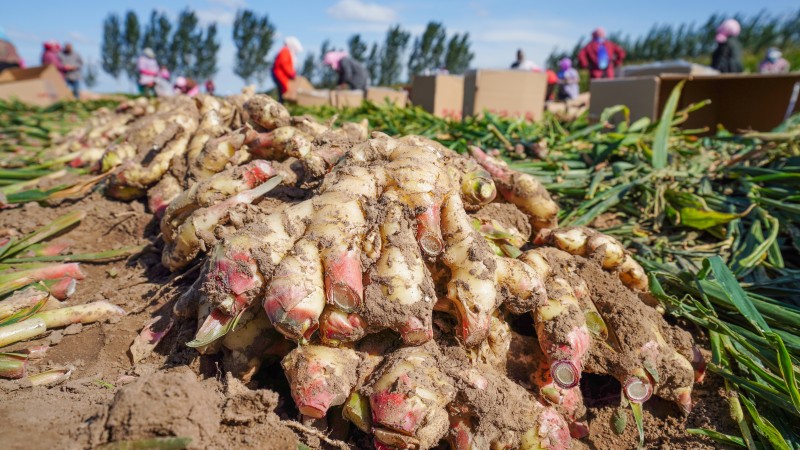
Another major importer reports a significant increase in shipment volumes from China and South America. Chinese shipments to Europe more than doubled between March and May compared with the same period last year. Combined with weaker summer demand, this has weighed on the market; import prices for Chinese ginger are currently almost half what they were last year. The outlook for late 2026 and early 2027 is promising. Surveys of the new crop in Shandong point to good root development. Harvesting is due to begin in October, with the first shipments to Europe scheduled from mid-December. A large number of large, high-quality rhizomes and moderate starting prices are expected.
Imbalance between supply and demand in the Netherlands
Following a rather slow summer, demand on the European ginger market is picking up again. At the same time, stocks of Chinese and Thai ginger are dwindling. As a result, the balance between supply and demand is becoming increasingly tight, a Dutch importer told FreshPlaza.
The situation is different for ginger and turmeric from Peru. An outbreak of Ralstonia pseudosolanacearum, a plant-pathogenic bacterium that can cause bacterial wilt or rhizome rot in ginger, is hampering Peruvian exports. The Peruvian plant protection agency, SENASA, is currently only allowing a limited number of exporters to continue exporting. Supply is therefore limited, while the risks associated with imports from Peru have increased. The reduced availability could become more noticeable on the market in the coming weeks.
China also remains the most important source of ginger for Germany. Following the seasonally quieter summer months, demand is picking up again as autumn approaches. At the same time, the quality of the available produce has improved following a period of declining quality. Current wholesale purchase prices stand at EUR 28 per 12-kg crate, equivalent to around EUR 2.33/kg.
Drought in India causes uncertainty
The Indian ginger market remains relatively firm, although prices vary significantly between growing regions. In Maharashtra, prices reported by the Agricultural Produce Market Committee (APMC) at the start of September ranged from around EUR 0.45 to 1.44/kg, depending on the market. Meanwhile, concerns are growing about the new crop. The monsoon has been patchy; in August, rainfall was 16% below normal, and below-average rainfall is also expected for September. Parts of Karnataka are already suffering from a prolonged drought. It is not yet possible to assess how severely this will affect ginger production.
Additional supply from Peru weighs on the North American spot market
Peru is the main source of supply for the North American ginger market, whilst China also supplies significant volumes, particularly of conventional produce. Peruvian ginger is currently reaching a particularly high quality stage, and the fully mature produce is arriving in North America.
At the same time, the additional supply from Peru is putting pressure on spot market prices in the US. The changes to European import regulations relating to Ralstonia have disrupted Peruvian shipments to Europe, thereby making additional volumes available for the North American market. Demand is currently stable, but is likely to pick up from October onwards as the weather turns cooler and the festive season begins, and usually remains at a good level until February.
Moderate prices are putting the brakes on planting plans in Peru
The Peruvian harvest is progressing with good yields, although prices are below last year’s levels. This is prompting growers to adopt a more cautious approach to planting plans for the 2027/28 season. The majority of shipments are destined for the US, whilst exports to Europe have declined due to significantly stricter phytosanitary controls relating to Ralstonia pseudosolanacearum.
Demand from the US is also weaker during the summer, and FOB prices are consequently at a moderate level. The still-young industry is continuing to professionalise, whilst at the same time facing increasing competition from Brazil and China. Looking ahead to 2027, a possible El Niño event and lower planting intentions are causing particular uncertainty.
Brazilian selling prices below production costs
Brazil is experiencing one of its most challenging years for the ginger sector. Selling prices are below production costs, whilst cheaper Chinese produce is exerting additional pressure. Their price advantage is bolstered by lower labour costs.
Additional burdens are arising from the new European phytosanitary regulations in force since April. Following a transitional period this year, exporters must certify the absence of Ralstonia pseudosolanacearum. The bacterium is present in Peru but has not yet been found in Brazil. Compliance with the regulations makes exporting more expensive, particularly for family-run businesses. The resulting reduction in supply, combined with improved weather conditions in Europe, could contribute to a more balanced market situation and support prices and margins.
Imports are putting pressure on South African growers
South African ginger growers remain heavily dependent on fluctuating import volumes. According to one grower, importers do not stagger the release of imported volumes but instead flood the market with them all at once. This puts pressure on prices for all market players.
Domestic supply has been stabilised at predictable levels to calm the market. However, given the volume of imports, these efforts are being partially undermined by shipments from China and Vietnam. According to FreshPlaza, ginger prices at the Johannesburg city market range between EUR 1.80 and 2.40/kg.
Higher EU imports
EU imports since the start of the year have risen by 8.5% compared with the same period last year. China remains by far the most important supplier, having increased its exports to EU countries by 14.7%, followed by India (+51.2% to 927 mt) and Vietnam (+6.1% to 505 mt). Indonesia managed to increase its shipments to the EU by a whopping 117.2%, whilst Peru suffered a decline of 24.6%.
The largest buyer within the EU is Germany, which increased its imports in the period 1 January to 27 September 2026 by 42.8% compared with the same period last year, to 2,770 mt. The next largest importers are the Netherlands, Belgium, Spain and France. The average import price of EUR 3.05/kg was just under 2% lower than last year’s figure; the total import value for the period in question was therefore just under 21.26 million EUR.
|
EU ginger imports, in mt |
|||
|
Partner |
2025 |
2026 |
Diff. |
|
China |
4,110 |
4,715 |
14.7% |
|
India |
613 |
927 |
51.2% |
|
Vietnam |
476 |
505 |
6.1% |
|
Côte d'Ivoire |
283 |
259 |
-8.5% |
|
Indonesia |
64 |
139 |
117.2% |
|
Peru |
179 |
135 |
-24.6% |
|
Nigeria |
384 |
131 |
-65.9% |
|
UK |
130 |
66 |
-49.2% |
|
Others |
195 |
104 |
-46.7% |
|
Total |
6,434 |
6,981 |
8.5% |
|
DG AGRI TAXUD Customs Surveillance System, 01/01-27/09 09101200 Ginger, crushed or ground |
|||
View more
- price charts
Attached Files

View related articles