
Almond industry plants to protect pollinators
July 8, 2026 at 9:46 AM ,
Der AUDITOR
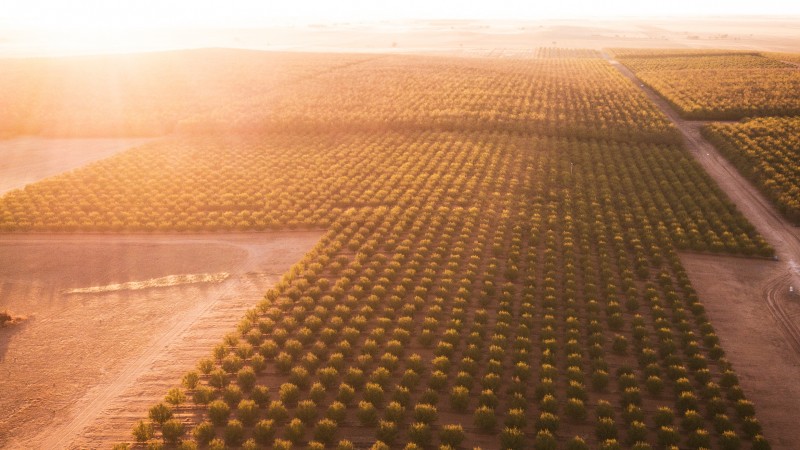
These tree varieties reduce demand on pollination services from beekeepers, freeing up hives for other horticulture producers.
It comes at a time when beekeepers and managed pollination services are under increasing pressure due to the arrival of varroa mite and the resulting demise of hives.
Almond Board of Australia CEO Tim Jackson said the almond industry works closely with the beekeeping industry, and he is pleased to see this strategic, sustainable approach showing in the new mapping.
“As an industry we have seen the pressure on the beekeeping industry building for years and have been keen to develop ways we can mitigate the issue and reduce the demand,” Mr Jackson said.
“Self-fertile plantings now make up about 7.5 per cent of all plantings, up from 2 per cent in 2023. It shows the good work being done collectively in the industry to address issues well before varroa actually arrived.”
The new mapping by LandIQ shows almond planting in general have increased over the past three years, from 62,400 hectares to 71,900 hectares.
The increases in plantings are focussed in the Riverina, the Riverland and in Shepparton in Victoria’s Goulburn Valley, as horticulture producers recognise the increasing value in almonds as a sustainable, reliable crop.
“The business model for almond production is sound,” Mr Jackson said. “It’s a high-value crop that’s nutritious, high in protein and has a long shelf life so there’s little waste.
“Over the years we have improved water use dramatically, making Australian almond growers global leaders in water efficiency and sustainable production. Now 95 per cent of all orchards use drip irrigation so there’s not a drop wasted.
“And with these new self-fertile varieties coming on, there will be less and less demand on pollination services, which benefits all of agriculture.”
The LandIQ mapping shows almond plantings have increased in Riverina, from 14,940 in 2023 to 19,030ha and the Riverland where plantings have grown from 11,940 to 14,370. Plantings in what is collectively defined as “Other regions” has increased, with plantings growing from 214ha to nearly 2,000ha, being driven by new orchard plantings in Shepparton.
NSW Sunraysia plantings increased by 538ha to 8,430 while over the border in Victoria, Sunraysia decreased by about 200ha to 25,690.
Plantings in the Adelaide Plains dropped from 506 to 449, while Western Australia held steady at 818ha.
“The growth in almonds is understandable,” Mr Jackson said. “This is an industry that contributes more than $1.3 billion to the national economy in exports each year.
“And at a local level, it’s a reliable crop that provides long-term employment for more than 10,000 people supporting regional and rural communities right across the almond growing regions in NSW, Victoria and South Australia.”
Mr Jackson said growers were optimistic about the future, with strong demand from domestic and export markets, particularly China and India, and said ongoing management of water will be one of the key issues for growers.
“We are proud of the achievements that have been made in the Murray-Darling Basin over the past 10 years,” Mr Jackson said.
“Over the past decade we have halved the amount of water we use for food production and we are producing more food.
“We are comfortable with the 27 per cent of the water allocated to industry, and 73 per cent allocated to the environment.
“What we now want to see is certainty with regards to water management.”
Almond Insights is produced as part of the Almond Industry Statistics and Benchmarking project AL25003, which is funded by Hort Innovation using grower levies and contributions from the Australian Government.
Read the official press release:
- Almond industry plants to protect pollinators
View related articles