
Desiccated coconuts: Philippine production to be strengthened
December 18, 2024 at 4:17 PM ,
Der AUDITOR
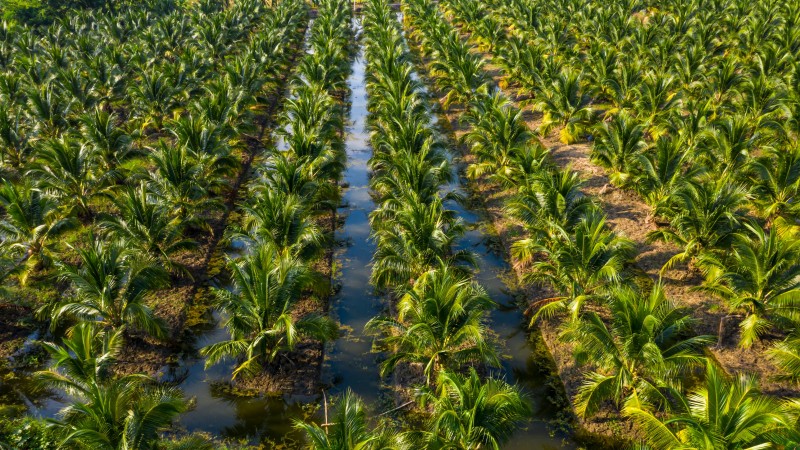
Urgently needed new plantings
Coconut production in the Philippines is expected to stagnate in 2025, according to experts from BusinessWorld. The trees in the plantations are getting older and older, which goes hand in hand with declining productivity. Data from the Philippine Statistics Authority already shows a slight decline in production, which, apart from the advanced age of the palm trees, is mainly due to unfavourable weather conditions as a result of climate change. In response to the declining productivity, President Ferdinand R. Marcos Jr. has instructed the Philippine Coconut Authority (PCA) to come up with a plan to revitalise the industry. According to BusinessWorld, the aim is to plant a total of 100 million new coconut palms by 2028. 8.5 million of these are to be planted this year, and the number of new plantings is to be significantly increased in subsequent years.
It is important that the state and the private sector work together to achieve these goals. In addition, the so-called Coco Levy Fund has been set up to support the modernisation and rehabilitation of the coconut industry. BusinessWorld reports, citing market expert Romeo I. Chan, that the act mandates a phased financial infusion into a trust fund dedicated to these efforts, and is to provide up to USD 1.3 billion over a period of five years.
Philippine exports on the rise
Meanwhile, T.M. Duché reports that global demand for desiccated coconuts continues to increase. The Philippine domestic market nevertheless recorded a slight decline in prices, while export prices rose compared to last week. The Philippines' desiccated coconut exports increased by 8.4% to 14,672 mt in October, exceeding the monthly average of 13,972 mt by 5%. The most important buyers are still the USA, the Netherlands and China. Despite the strong demand, however, there are also numerous challenges, according to T.M. Duché. Weather-related interruptions in the Philippines have reduced supply and increased production costs. In addition, there is competition from other tropical oil-producing countries.
View more
- price chart, desiccated coconuts, Sri Lanka
- price chart, desiccated coconuts, Indonesia
- price chart, desiccated coconuts, Philippines
- price chart, coconut oil, Indonesia
- more price charts
View related articles