EU: impact of Free Trade Deal with Australia for agri-food producers
March 25, 2026 at 12:40 PM ,
Der AUDITOR
Opening new export opportunities
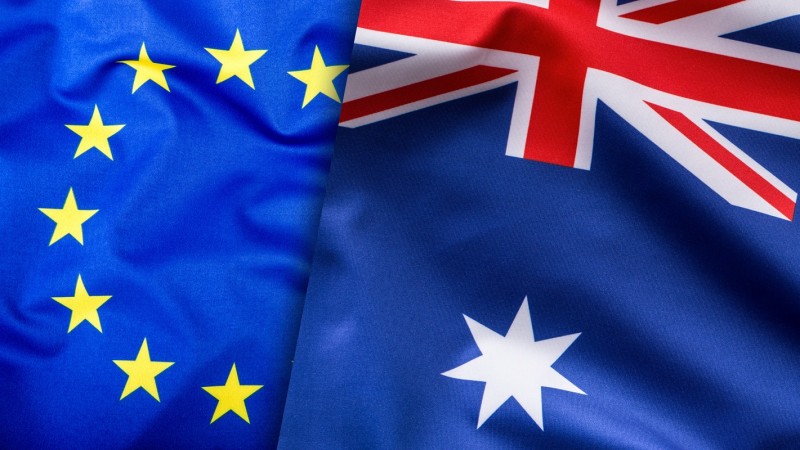
In 2024, the EU had a positive trade balance with Australia for agri-food products of €2.3 billion. Now the Free Trade Deal will eliminate import duties on all EU agri-food exports to Australia.
European farmers and food businesses will see new business opportunities in Australia, as the free trade agreement removes all tariffs on EU agri-food exports.
Tariffs will go down to zero on all products, including for key EU export products, such as wines (including sparkling wine), chocolate, sugar confectionary and ice cream.
|
Product |
EU export values to Australia in 2025 |
Current tariff |
New tariff under the EU-Australia Free Trade Agreement |
|
Pasta and preparations of cereals |
€460 million |
4-5% |
0 |
|
Preparations of fruit and vegetables |
€377 million |
5% |
0 |
|
Chocolate and sugar confectionary |
€355 million |
5% |
0 |
|
Wines and vermouths |
€327 million |
5% |
0 |
|
Cheeses |
€249 million |
AUS$ 1.220/kg for cheeses (approx. 11%) |
0 |
|
Food preparations |
€244 million |
4-5% |
0 |
|
Spirits and liquors |
€150 million |
5% |
0 |
|
Other beverages |
€118 million |
5% |
0 |
|
Ice cream |
€29 million |
4% |
0 |
Protecting the EU’s finest food and drink products
The deal expands the protection of traditional EU food and drink products, directly via the agreement, and through the adoption of an EU-like system of protection for Geographical Indications in Australia that currently does not exist (except for wines). So with this agreement, Australia is becoming a 'GI like-minded' partner.
- The EU protects the names of specific food and drink products whose qualities are closely linked to the area of production through 'Geographical Indication' (GI) status.
- Such protection helps make these products more distinct, which will allow producers to strengthen their market positions in Australia and to sell for a premium price.
- The agreement will protect 165 agricultural and food GIs and 231 spirit drink GIs, including some of the most renowned such as Comté, Irish Whiskey, Queso Manchego, Salam de Sibiu, Istarski pršut ham, Lübecker Marzipan, and Masticha Chiou, which will now be protected in Australia.
- The agreement foresees the opportunity for both parties to add more GIs in the future.
Wine
The EU and AUS have also agreed on a modernised bilateral agreement on wine, which will offer:
- A review and update of the full list of EU wine GIs and Traditional Terms protected in Australia, building on the previous successful agreement, which will offer protection for all EU wine GIs including the addition of around 50 new GIs from 12 different Member States.
- Protection for the GI 'Prosecco', preventing Australian producers to export wines using this term after a transition period of 10 years from the entry into force of the new agreement. The term could continue to be used in Australia as a varietal name, with strong labelling disciplines in order to avoid the consumer being misled about the true origin of the wine.
- Simplified recognition of international winemaking practices.
Defending the interests of European farmers
In parallel, the EU will also be carefully opening its market for imports of Australian agri-food products.
For a few sensitive products, access to the EU market will be limited through carefully calibrated tariff rate quotas, gradually implemented, and with significant sustainability conditionalities aiming at ensuring that imports into the EU are more aligned with the EU’s own production standards on climate, the environment, and animal welfare.
- Beef meat: Under the agreement, the EU will open two tariff rate quotas of a total of 30,600 tonnes expressed in carcass weight equivalent (CWE), with a majority of the volume (55%, corresponding to 16,830 tonnes CWE) entering duty-free and subject to a 'grass-fed' conditionality, and a smaller portion (45%, corresponding to 13,770 tonnes CWE) to be imported with a reduced duty of 7.5%. These volumes will be gradually phased in over 10 years from the entry into force of the agreement, with one-third of the volumes granted at entry into force and kept for a period of five years, ensuring a very gradual implementation of the agreement. This represents around 0.5% of EU domestic consumption of beef and less than 2% of all Australian exports of beef to the world.
- Sheep and goat meat: Under the agreement, the EU will open two tariff rate quotas of a total of 25,000 tonnes CWE to be imported duty-free, with a smaller portion (27%) limited to frozen meat. This represents around 4% of EU consumption of sheep and goat meat. This volume will be gradually phased in over seven years from the entry into force of the agreement, with one-third of the volumes granted at entry into force. These quotas will be exclusive for 'grass-fed' sheep and goat meat, not raised in feedlots, with higher costs of production and higher sustainability credentials.
- Sugar: Under the agreement, the EU will open a tariff rate quota of 35,000 tonnes of raw sugar cane for refining to be imported duty-free. This represents less than 0.3% of EU consumption of sugar. The import of sugar to the EU via this concession will be subject to certification by a private sustainability scheme, in line with the EU's effort to ensure high standards of sustainability in this agreement.
- Dairy: The most sensitive EU products will be protected by modest tariff rate quotas, notably 8,000 tonnes for skimmed milked powder, 5,000 tonnes for butter, and 2,000 tonnes for whey protein concentrates. These represent around 1.1% of EU consumption of skimmed milk powder, and 0.25% of EU consumption of butter.
- Rice: Modest access through an 8,500-tonne tariff rate quota will also be granted for rice, starting with 5,000 tonnes at entry into force and a phasing-in period of five years. This represents 0.3% of EU consumption of rice.
- Other products: Access through modest tariff rate quotas will also be granted for wheat gluten (20,000 tonnes), sweetcorn (800 tonnes), bulk rhum (750 hl), derivative starches (1,000 tonnes) and ethanol (10,000 tonnes), all at zero duty.
Extra protections and safeguard
- The EU can impose safeguard measures in case of a surge in EU agri-food imports from Australia when it causes or threatens to cause a serious injury to EU industry. As an additional layer of protection for farmers, a bilateral safeguard mechanism will be operationalised in a self-standing EU regulation that will see swift and effective protections kick into gear, in the unlikely event of an unforeseen and harmful surge in imports or an undue decrease in prices for EU producers.
- No agri-food products from Australia will enter the EU without respecting all the EU’s high health and safety standards. These measures are non-negotiable.
- Moreover, the EU has recently announced a reinforcement of controls on food, animal and plant products entering the EU, increasing the number of audits carried out on non-EU countries by 50%, and those carried out on EU Border Control Posts by 33% in 2026-2027. It has also set up a dedicated EU Task Force to make import controls more efficient throughout the EU.
- The EU has launched impact assessments to analyse potential alignment of production standards between domestic and imported products, notably on pesticides and animal welfare.
Sustainable and safe food
With a dedicated chapter on Sustainable Food Systems and Animal Welfare, the parties will work together on animal welfare, nutrition, food loss and waste, food fraud, antimicrobial resistance, pesticides and fertilisers.
The EU has very stringent standards to protect human, animal and plant health. Any product sold in the EU (domestically produced or imported) must comply with the EU’s SPS standards. These remain unaltered regardless of trade agreements concluded by the EU, such as the EU-Australia Agreement.
The EU:
- Keeps a robust SPS import system based on science, risk assessments, audits to third countries, border controls, and controls in the EU market, ensuring effective compliance with the EU rules and taking account of international standards.
- Remains fully independent in adopting safety criteria for products reaching the EU market, including the setting of maximum residue levels for pesticides that are of global environmental concern, such as neonicotinoids.
- Keeps a science-based approach on genetically modified organisms and any other food matters.
- Reaffirms the precautionary principle within the agreement, permitting the adoption of provisional SPS measures, including in cases where scientific information is insufficient.
- Conducts impact assessments to analyse potential alignment of production standards between domestic and imported products, notably on pesticides and animal welfare.
- Has announced an increase in the number of audits to third countries and reinforced measures to strengthen border controls on imported food, animal and plant products.
View the EU Factsheet – EU-Australia Free Trade Agreement: Working for Farmers
View related articles