Chestnuts: good season in China
May 19, 2026 at 9:10 AM ,
Der AUDITOR
Changes in the export trade
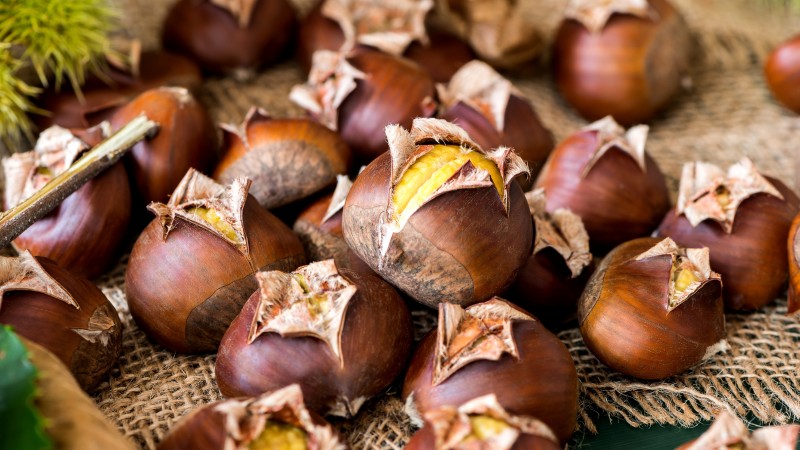
Exports in the Chinese chestnut market have reached their peak. As the experts at Tai'an Yihang Chestnut Origin Factory report in their latest update, the current season is characterised overall by better production results and higher quality. Compared to the previous season, the crop volume has risen significantly and the chestnuts are of a uniform size. Meanwhile, the trees are already in the budding and flowering phase, with the 2026 crop expected from early September.
Weather conditions during the 2025/26 season were generally favourable, particularly in key growing regions such as Hebei and Shandong. Sufficient sunshine and stable weather during the ripening phase promoted sugar accumulation and flavour development. In Tai’an, a major growing region in Shandong, regular rainfall and sufficient hours of sunshine supported the development of the chestnuts. In some plantations in Daiyue County, yields of around 5,625 kg/ha were achieved.
Prices at origin, however, are slightly higher than last year and demand remains subdued. A clear trend towards “premium quality, premium price” is emerging on the market, further widening the price gap between high-quality and standard chestnuts. Nevertheless, China’s chestnut exports are showing an upward trend. Processed products are now in particularly high demand, whereas the sector originally specialised in the export of unprocessed inshell chestnuts.
EU imports relatively stable
EU imports have remained relatively stable this year. In the first four months of 2026, 1,147 mt of chestnuts worth EUR 2.931 million were imported from third countries. However, the significantly lower average price of EUR 2.55/kg meant that the import value was 7.1% lower year-on-year. Turkey (+38.8% to 916 mt) is currently by far the EU’s most important trading partner. China’s shipments, by contrast, fell to 226 mt, almost halving. Shipments from these two countries account for the majority of EU imports. The main buyer within the EU is Italy (599 mt), followed by Portugal (294 mt), Spain (72 mt), Belgium (71 mt) and Germany (34 mt).
Meanwhile, Italy accounts for more than 90% of EU chestnut exports, with 486 mt. EU shipments were primarily destined for Switzerland (200 mt) and Malaysia (153 mt).
|
EU chestnut imports, in mt |
|||
|
Partner |
2025 |
2026 |
Diff. |
|
Turkey |
660 |
916 |
38.8% |
|
China |
432 |
226 |
-47.7% |
|
Brazil |
- |
5 |
n/a |
|
Chile |
65 |
- |
-100.0% |
|
Others |
3 |
- |
-100.0% |
|
Total |
1,160 |
1,147 |
-1.1% |
|
DG AGRI TAXUD Customs Surveillance System, 01/01-10/05 08024200+08024100 Fresh or dried chestnuts "Castanea spp.", shelled+ inshell |
|||
View more
- price charts
View related articles