Interview: California Prune Board’s outlook on crop and market development
July 3, 2026 at 11:30 AM ,
Der AUDITOR
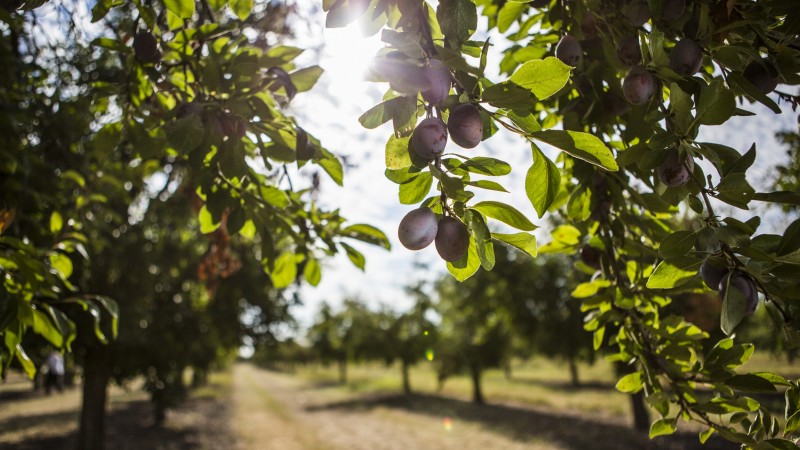
The Prune Board was established in 1980 to represent growers and handlers under the authority of the California Secretary of Food and Agriculture. California is the world’s largest producer of premium prunes with orchards across the Sacramento and San Joaquin valleys. Promoting a lifetime of wellness through the enjoyment of California Prunes, the organization leads the premium prune category with generations of craftsmanship supported by California’s leading food safety and sustainability Standards.
Background info: Improved French plums in California trace back to d’Agen rootstock brought from France in the 19th century, with Frenchman Louis Pellier and his brother Pierre grafting the rootstock onto wild plum trees. Initially, trees were planted in what is now Silicon Valley, in California’s South Bay area near San Francisco, with the epicentre of the California prune industry today now the Sacramento and San Joaquin valleys.
Through careful grafting – rootstocks joined with another to create what are now known as improved French plums – California found a varietal that excels both for growing and for drying prunes. These plums stand out not just for their sugar content, but for their texture, their ability to maintain moisture through drying, and of course their great taste.
AUDITOR: Thank you, Donn, for this opportunity to speak with you. What can you tell me about how the orchards in California are currently faring? Are they in a good state? How is the weather there at the moment? And what can we expect from this year’s harvest in regard to the crop?
Donn Zea: We have a good crop. That's the most important thing. We've had a few good crops in a row, and that can be hard to come by because growing high-quality prunes is hard and weather can be fickle. The weather here has been generally cooperative. We have swings of temperature, but the research that we do with the University of California primarily tells us that when the trees are at their peak blooming phase – which usually happens in early March – we want to avoid in that 48 to 72 hour period temperatures above 80 °F. The higher it goes above 80 °F, the more likely it is that the bloom would be negatively affected.
Well, this year, we did not have temperatures at that peak period that were above 80 °F, but we did have warm temperatures all around it. We had swings of temperature, but we were able to persevere through that. And there was initial concern, and we quickly could see that the concern was unfounded and that the crop was going to be good. So, it is developing nicely, with some concern that the higher temperatures of early June may have caused some sunburn and early drop of fruit. We have done what we typically do, and that's invest in shaker thinning to make sure that our crop load is not too heavy. And that has happened across our growing regions. Our ultimate goal is to produce a range of medium to large sized prunes with the most optimum sweetness for both the consumer and for drying capabilities. And so, it appears that that is happening.
If anything, the harvest will be maybe a week early this year. So, I would expect the second week of August will likely be when harvest starts – but that is still to be determined. This period that we're in right now, June to July, is where you start getting down to which day the harvest will start and the dryers fired up and ready to receive the fruit. And so, we see it as being a little bit early, but overall, we're getting excited about it and the crop looks great.
AUDITOR: We know from other dried fruits like raisins, apricots and figs that the yield and quality of the dried fruits might vary depending on the weather during the drying period. Did you face any issues regarding that in the past? Any unforeseen weather circumstances that might have caused any issues with the final results or with the quality of the product?
Donn Zea: You've hit on one of our issues we like to talk about because it is a pillar of our premium quality, and that is the drying. Concerning your question whether the weather influences our drying period or not, the answer is: It does not. And that is because 100% of what we harvest goes into tunnel dryers. Those have their own internal environment and allow us to apply exact specifications to ensure the quality. Tunnel drying is a major investment that not all prune producing countries make but we believe it is essential.
What happens is those prunes come out of the dryer like a baker would want their bakery products to come out of the oven. They are as perfect as we can get them. And so, nature does its thing in the orchards and we then take it and we perfect it by putting them in tunnel dryers. So, we get consistency across all of our crop when it comes to the consumer and the trade can be confident that what they're getting is high quality premium prunes.
At the California Prune Board, we base our annual budgets on the crop results, because we have a fee that is charged to our processors and our growers that is based on the tonnage that we produce in any year. This drives our investments in marketing and communications, crop and nutrition research, and advocacy with our policymakers in Washington, D.C. And so, this is a number that's important to us.
The harvest will probably start in the second week of August and right now, we are estimating a crop of about 68,000 mt. That's just about what we had last year. So, pretty consistent across these two years. Of course, you never really know until you get in there and start harvesting, but we've gotten pretty good at estimating. And we're experimenting with technology to look at fruit loads with LiDAR and other means. So, it's just not calling on the wisdom of growers to estimate tonnage and yield. It's more than that now. We have roughly 37,000 acres of bearing orchards and are making sure that our older orchards that are being replaced with new plantings to ensure orchard vitality and yield.
AUDITOR: How long does the drying process usually take? I think with the tunnels, it gets probably dried faster than when you rely on sun drying. When can the product from the new crop hit the market, when will it be available to be shipped out to the buyers?
Donn Zea: Definitely. When the prunes come out of the orchards, they are, of course, washed. They then go to into the tunnels. That tunnel drying process takes about 18 hours at approximately 180 °F. They're put into the dryers in wood trays on rolling chassis and then taken out the other side when finished.
They then go off to be inspected where we make sure that our quality is high across the crop. Those prunes then end up in a processing facility where they are stored and prepared for the market, whether in pitted, natural condition, or derivative forms.
AUDITOR: But the California Prune Board is not involved in the trading?
Donn Zea: No. We are not involved in the negotiation or sale. So, our individual companies, they are responsible for their own trade relationships and negotiations. We do have relationships with trade in certain markets – for instance, in Japan – but it's mostly on marketing and promotion issues. We don’t get involved in the sale here in the US either. The Prune Board’s role is to support an environment where the trade and consumers can better understand why prunes are so good for you, taste so good, can be used in so many different ways. Ultimately, to create a world enthusiastic about California Prunes. So, we educate the trade and consumers, and then we hopefully set the standard from which California prune growers and processors can prosper alongside the trade.
AUDITOR: Could you still give me your opinion on the price trend for the new season?
Donn Zea: That is not an area that we get involved in. I can tell you, that we strive hard to remind our industry how important it is to keep our supply in balance with demand.
We do not like to be in oversupply. On the other hand, our industry works to make sure that it has inventory on hand to take care of its customers 365 days a year. So, we don't rush to sell out like other producing countries may do. And so, we do not get involved in price.
What we can tell you, though, is the supply and demand is generally in balance. So, while all of the external economic issues are certainly a concern, we think prices will likely be pretty firm, consistent with last year – to be determined by each individual handler and the deals that they make, of course.
AUDITOR: Despite the consistency in crop, prices and market, were there any issues within the last years that the industry has faced or to accommodate to? Did the most recent war with Iran impact your trade flows, for example?
Donn Zea: From a market standpoint, the Gulf region is currently not one of our priority markets. We do some business there, but the bigger impacts, of course, have been on what it has done to the global economy – starting with energy.
And not only here in the US and the spikes of energy that we've experienced – even though we don't rely on a lot of Middle Eastern energy, because we produce a lot of our own, we get it from Canada and Mexico and other places – it does have a significant impact on the cost of doing business. And it does for our markets as well. So, if it's causing economic pull-back in Japan, for instance – which gets a lot of its energy from that region – to have to cut back, it's just going to have an influence on business overall. And so, we certainly feel it just like everybody else does.
We do have some sustainable forms of energy that have been integrated into agriculture – whether it’s solar, cogeneration, or something else. So, it helps. Generally, it is just an expensive time and California is one the most expensive places to do any kind of business, including agriculture. That has a lot to do with our regulations, which are often driven by sustainability and labor practices. Add that on top of the global energy issues and it can be tough. Our industry is challenged to be as entrepreneurial and efficient as they possibly can. The one thing we won't sacrifice is our premium quality. So, we just have to figure it out and grind through it. That's what we're doing.
AUDITOR: I read that most of the California prunes are destined for the domestic market?
Donn Zea: Correct. But that hasn’t always been the case. Right now, that is accurate. And yeah, it varies – but on average right now it’s about 60% domestic and 40% export. In crop years such as 2021, when South America experienced a short crop, that percentage can change dramatically as we supply the international trade with more California Prunes. We look for markets that make the most sense for our industry, from a marketing strategy standpoint, shipping costs, market access issues, and what our competitors are doing. From a domestic perspective, the market is strong, notwithstanding the economic challenges.
At the same time, we also care deeply about export markets. We’re in over 60 markets. But from the Prune Board standpoint, where we focus our efforts – it is more limited. to markets including Japan, Canada, Mexico, and Italy. We also do some work in the UK and South Korea, and we’re looking at Southeast Asia and a number of other places.
Vietnam is a new market where we’re doing a little bit of work. So, we do see opportunities across the world. But we can’t be everywhere from a marketing standpoint – so we focus on the areas with the most opportunity that won’t be diluted by lesser quality, low-priced competition. We simply can’t compete that way.
Speaking from the export standpoint however, Japan is still number one with a market share over 90%. The European continent has also been collectively a very large market for us for a long time. The recent U.S.-EU trade deal that removes the tariff on U.S. prunes, juice, and concentrate should be very helpful.
AUDITOR: You mentioned Vietnam is one of the newer markets where you're trying to establish the California prunes. Are there any other markets that have a lot of potential, but where the California prunes are not as present as of yet?
Donn Zea: I think Southeast Asia in general – Singapore, Thailand, the Philippines – has a lot of opportunity. We have to look for premium markets, and in any country where the middle class is developing, there are niche markets.
We would love to be in places like India, but there are lots of challenges that make it, in some ways, prohibitive for us to put a lot of resources into marketing there. And we only have so many prunes – we’re not a large volume producer, we focus on quality and are working to ensure demand pulls through production growth. And I think it’s important to point this out: we are a specialty crop. That’s what we call them in the United States. Any crop that is not a commodity is generally referred to as a specialty crop.
So, we’re not selling on moving volume at a lower price. We’re focused on growing and shipping the best prunes possible.
We can’t market everywhere – and that’s why the markets we choose are really important to us. We’re also the only industry that really goes in and supports market-based efforts. We spend a significant amount of money through the Prune Board every year to support our growers and our handlers in selling their fruit. In some cases, we partner with the United States Department of Agriculture and the Foreign Agricultural Service to support export markets.
We’re all in to make sure we’re supporting our industry. And to the degree that supports the trade and helps them sell our fruit, that’s a win-win. Most other prune producing countries, for the most part, don’t do this. They don’t spend the kind of resources we do to back up the industry, to make sure everybody wins.
So, it’s our job to make sure there are more consumers out there overall. We’re trying to do that every year in a methodical, strategic manner and we believe we’re making progress.
AUDITOR: At last, could tell me what your current outlook on the prospects for California prunes is?
Donn Zea: We’re generally positive. Again, market selection is really important for us, so you have to do your homework – but overall, we’re positive.
We love the fact that there’s a discussion about healthy foods going on. It’s a robust discussion. We’re minimally processed, we’re natural, and we’re absolutely full of great nutrients. There’s nothing but opportunity for food products like that, and we believe we’re at or near the top of the list.
So, we want to continue producing more information for consumers to enjoy prunes as snacks – but also to enjoy them in baking and cooking, and ingredient use in food service, those are all opportunities for us as well.
AUDITOR: Thank you very much Donn, for taking the time to speak with us.
View related articles