Almonds: record exports in April
June 22, 2026 at 4:49 PM ,
Der AUDITOR
Exports pick up again
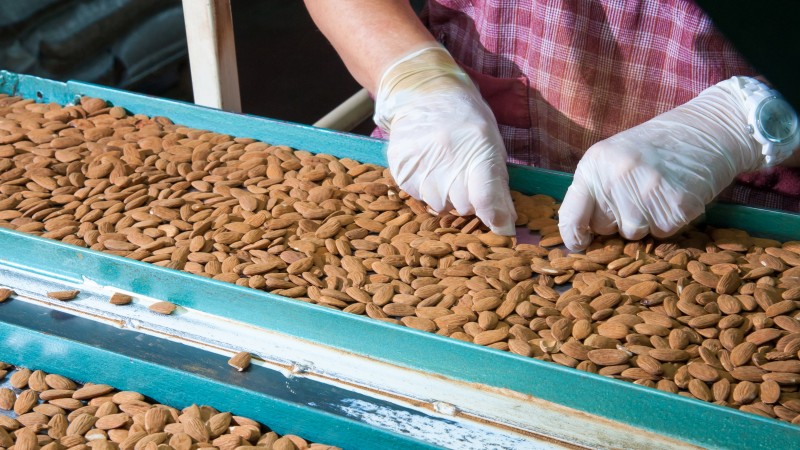
Following a weaker start to the 2026/2027 season, Australian exports rebounded significantly in April 2026, setting a new monthly record, according to the latest report from the Almond Board of Australia. Exports in the second month of the current season totalled 9,103 mt (+13% year-on-year), including both shelled and unshelled almonds. As domestic shipments also achieved their second-best result to date of 2,040 mt (+4% year-on-year), total shipments for April also reached a new record of 11,143 mt, representing an 11% increase compared with the same month last year. China was the main buyer, accounting for 4,918 mt (+42% year-on-year), with around 54% of exports going there. Other major buyers were Vietnam (+238% year-on-year), India (-38% year-on-year) and Germany (+201% year-on-year).
However, total domestic and overseas shipments declined by 3% year-on-year (March-April) to 16,970 mt, due, amongst other things, to rainfall during the harvest and the resulting longer drying time. Whilst domestic shipments rose by 3% to 3,724 mt compared with the same period last year, exports fell by 5% to 13,246 mt. At 7,100 mt, around 54% of Australian almond exports went to China, followed by Vietnam (143%), India (-49%), Spain (-22%) and Germany (+124%).
|
Almond shipments*, Australia, in mt |
|||
|
Destination |
2025/26 |
2026/27 |
Diff. |
|
China |
5,342 |
7,100 |
32.9% |
|
Australia |
3,601 |
3,724 |
3.4% |
|
Vietnam |
716 |
1,738 |
142.7% |
|
India |
3,191 |
1,623 |
-49.1% |
|
Spain |
609 |
475 |
-22.0% |
|
Germany |
190 |
425 |
123.7% |
|
USA |
450 |
387 |
-14.0% |
|
New Zealand |
245 |
308 |
25.7% |
|
Turkey |
1,768 |
292 |
-83.5% |
|
Thailand |
282 |
291 |
3.2% |
|
Others |
1,091 |
607 |
-44.4% |
|
Total |
17,485 |
16,970 |
-2.9% |
|
Almond Board of Australia; Mar-Apr *shelled and inshell |
|||
Consequences of heavy rainfall
In the winter issue of the Almonds Board of Australia’s industry magazine In A Nutshell, almond growers report on the challenges they faced during the 2026 harvest season. In some cases, the harvesting process took growers around twelve weeks instead of the usual seven, as work had to be suspended for up to a week due to the rainfall. According to the report, this also led to some seasonal workers leaving, as they went on to find other work.
Meanwhile, other reports indicated that plantations were flooded and that, despite pumping out the water, some trees died or became diseased. The latter could also affect next year’s yields until the trees have recovered. To dry the nuts more efficiently, the growers have developed their own methods; among other things, the almonds were spread out on fine wire mesh, and a gable-like opening at the top provided additional air circulation.
View more
- price chart, almonds, Mamra, Iran
- price chart, almonds, natural 13/14, Largueta
- price chart, almonds, blanched, 27/30, California SSR
- more price charts
View related articles