
Prunes: the competition never sleeps
March 14, 2024 at 9:10 AM ,
Der AUDITOR
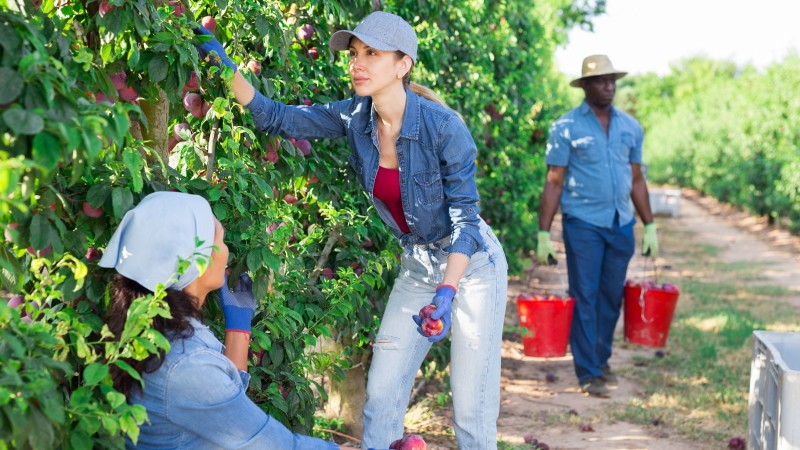
Chile remains in first place
As the experts at Chelmer Foods report with reference to La Palma, an extremely successful season is emerging for the Chilean plum industry. Exports of fresh plums are expected to be an impressive 3,300 containers, significantly higher than the 2,600 containers of the previous season. This means that around 71,000 mt are likely to have been exported, which corresponds to around 25% of the total Chilean crop.
The harvest process in Chile began with a delay of around two weeks, but this was foreseeable for the growers and does not appear to have had a negative impact on the crop. La Palma also reports that the quality of the fruit is good, even though it had a lower sugar content at the start of the harvest. The farmers are very satisfied with the current developments and everything indicates that Chile will be able to consolidate its position as the most important player on the international prune market. However, Juan Pablo Sotomayor, technical manager for prunes at Frutexsa, points out to Chileprunes that the late start to the harvest will force growers to dry their fruit throughout March and into April. However, G Buttner & Co. states that prune production is likely to be 55,000-60,000 mt. Normally, 3 kg of fresh fruit are needed to produce 1 kg of prunes.
Growing competition
The well-known industrial engineer and director of international business Sebastián Valdés Lutz emphasises to Chileprunes, however, that it is also very important to keep an eye on the newer players. In addition to Chile, France, the USA (California) and Argentina are still considered the most important producers. However, favourable prices could ensure that growing countries such as Uzbekistan, China, Serbia and Moldova can also quickly gain market share. The different weather conditions in particular could play a decisive role in the price trend here. In recent years, the reduced supply due to climatic events in California, France and Argentina has kept the price of fresh plums at a very high level. New market players could counteract this. Lutz highlights the example of Uzbekistan in particular; in 2016, the country's exports were still at 20,000 mt, now they are already at 33,000 mt. This means that Uzbekistan is now the third most important exporter in the world, behind Chile and the USA. Many shipments go to neighbouring Russia and China, which are also important markets for Chilean suppliers.
Then there are Serbia and Moldova, which have a long tradition of drying, marketing and exporting plums and have recently organised themselves to enhance the value of their product and make it more competitive. Their volumes are not insignificant and are very close to those of Argentina.
View more
- price charts
View related articles