Iran: agri-food export situation
April 30, 2026 at 9:57 AM ,
Der AUDITOR
Shipments continue despite ban
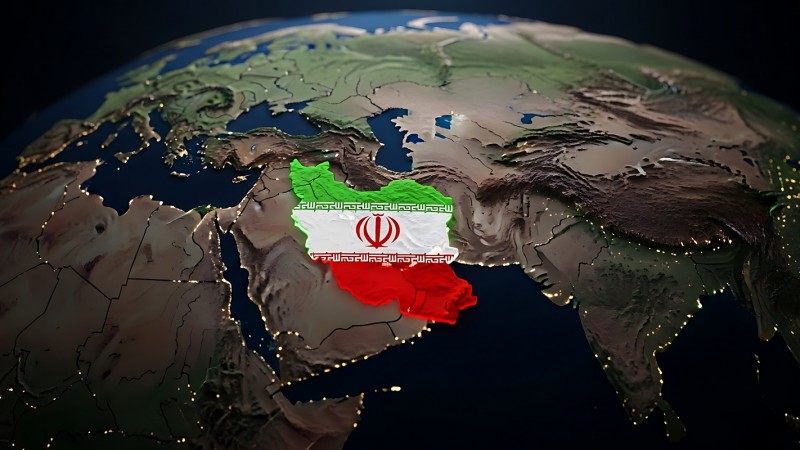
Despite Iran having officially banned all food and agricultural exports indefinitely as of 3 March 2026 to ensure that enough supplies are available in the domestic market, exporters are still trying their best to sell nuts and dried fruit, spices and herbs. Fact is that the blockade of the Strait of Hormuz, effective since the US-Israel led war on Iran started on 28 February, has prompted exporters to switch to other routes. Iran is the world’s leading producer of saffron and the second largest producer of pistachios. In addition, the country plays an important role in the international supply chain for raisins, figs and dates.
High dependency on Strait of Hormuz
Prior to the conflict between the United States and Iran and the subsequent maritime blockade, which led to restrictions on Iran’s southern sea routes, the country’s export infrastructure predominantly relied on maritime transportation. A substantial volume of export goods was dispatched through Iran’s southern ports, utilising the Strait of Hormuz to access target markets. Concurrently, a network of land borders and railway lines also contributed to export activities, albeit with a comparatively smaller share than maritime routes. Key border crossings included Bazargan near Turkey, Parviz Khan, Bashmaq, and Mehran bordering Iraq, Astara adjacent to the Republic of Azerbaijan, and Mirjaveh along the Pakistani border. These served as gateways for a portion of Iranian exports. Furthermore, northern corridors via Astara and the Caspian Sea ports facilitated trade connections with Russia, the Caucasus and Central Asia. Nevertheless, the principal role in handling the bulk of export commodities remained vested in the southern maritime routes.
Alternative transportation network up and running
After the conflict started, the operational prominence of land and rail routes for the transit of Iranian export goods significantly increased. A larger proportion of Iranian exports was consequently rerouted through land borders and regional corridors. In northern Iran, the Astara border - distinguished by its triple connectivity via road, rail, and maritime access through the Caspian Sea - emerged as a pivotal export hub linking Iran to Eurasian and European markets, among others. Similarly, northern ports situated on the Caspian Sea, including Anzali, Amirabad, Caspian, and Nowshahr, are now utilised for the dispatch of Iranian export shipments to Russia and other adjacent states of the Caspian Sea, thereby complementing the existing land-based infrastructure.
In western Iran, the Bazargan border crossing maintains its status as a primary passageway for exports to Turkey and, by extension, to European markets. Concurrently, the Parviz Khan, Bashmaq, and Mehran border crossings play an extensive role in the movement of Iranian export goods to the Iraqi market, accommodating a substantial volume of trade. In eastern Iran, the Mirjaveh border functions as an active connection point with Pakistan, facilitating the transfer of goods to that nation. Collectively, these various gateways form an interconnected network of land and rail routes through which a significant portion of Iranian exports is channelled.
The increased activity at these borders coincides with an enhanced utilisation of regional corridors for the transit of Iranian export commodities. Northern routes, which connect Iran to Russia and Eurasian countries via Azerbaijan; western routes, providing access to regional and extra-regional markets such as Europe through Turkey and Iraq; and eastern routes, which establish trade links with Pakistan, have all been integrated into the export flow. Within this framework, the northern and western borders, specifically Astara, Bazargan, and the Iraqi crossings, alongside the eastern Mirjaveh border, function as paramount entry/exit points for Iranian export goods. The northern Caspian Sea ports further contribute to the robustness and comprehensiveness of this transportation network.
Internet shutdown a big problem
Another problem exporters face is the near-total internet shutdown, which was first implemented in January with the regime cracking down on protesters. On 28 February, authorities completely shut down all internet access and a near-total blackout has remained in place ever since with restricted access for selected groups as media reports highlight. This renders international communication extremely difficult for exporters. As Iran International reports the country’s position in the international market has been weakened and the economic loss is very high. Iran’s Chamber of Commerce estimates daily losses at USD 30-40 million or rather USD 70-80 million when indirect damages are factored in.
On Tuesday, local media reports also stated that customs authorities have banned the export of certain steel products, including slabs and sheets, until 30 May following US and Israeli attacks on two important steel plants in the Provinces of Isfahan and Khuzestan. Prior to this, the country banned international sales of certain chemicals, petrochemicals and polymers after petrochemical factories were hit.
View more
- price charts on nuts, dried, fruit, seeds, grains and spices
Attached Files

View related articles