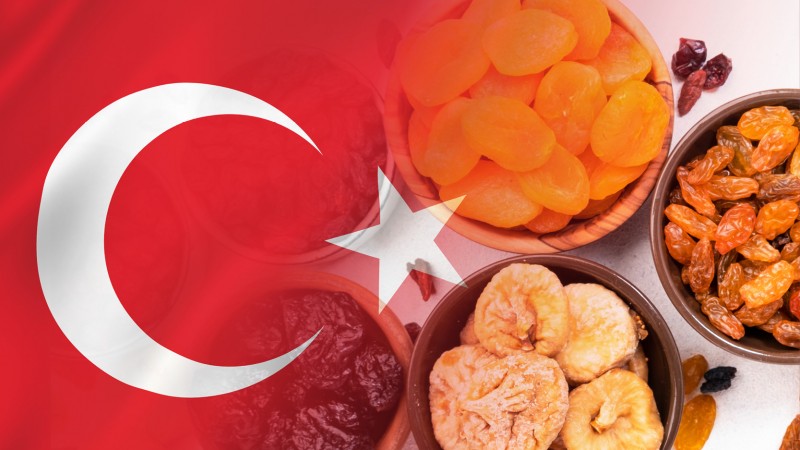
Dried Fruit: “Apricot prices have skyrocketed”
December 29, 2025 at 11:00 AM ,
Der AUDITOR
Which were the main difficulties faced by the dried fruit markets in 2025? What has changed compared to the last two years?
Due to the continuously increasing producing costs in Türkiye it became more and more difficult to compete with other origin producing countries which resulted in the fact that Türkiye has exported 50.000 mt less sultana raisins of the 2025 crop compared to the previous season. The turkish Lira also remained strong which made it also difficult for the exporters to compete.
Climate Catastrophes
- Apricot Devastation in Türkiye: A historic frost in April 2025 wiped out much of the Malatya apricot crop, causing severe supply shortages and price spikes.
- Global Weather Volatility: Other producing regions (Iran, India, parts of Europe) also saw droughts and erratic rainfall, reducing yields of raisins, figs and dates.
Inflation & Cost Pressures
- Production Costs Soared: Fertilizer, energy, labour and packaging costs rose sharply, squeezing margins for exporters.
- Price Sensitivity: With dried fruit prices at or near record highs, consumer demand weakened in lower-income markets.
Geopolitical tensions are an ongoing issue.
How did the import tariffs on shipments to the USA impact the dried fruit trade?
In April 2025, the US imposed a 10% import tariff on all countries, including Türkiye, under President Trump’s revised trade policy. Despite the tariff, Türkiye was less affected than other nations due to its balanced trade volume with the US. In 2024, Türkiye exported USD 16.35 billion to the US and imported USD 16.23 billion, maintaining a modest surplus.
Turkish dried fruits – especially raisins, apricots and figs – are price-sensitive in the US market. A 10% tariff raised wholesale costs, potentially reducing competitiveness against lower-cost suppliers like Chile or Iran.
While overall exports to the US rose by nearly 10% in 2024, the dried fruit segment may face volume stagnation or decline in 2025 due to price resistance from US buyers.
Turkish exporters likely have to absorb part of the tariff cost or renegotiate contracts to maintain US market share.
Were there any noticeable drawbacks on the trade with Russia when it comes to dried fruit? Or did Turkish traders actually benefit from the trade restrictions imposed by Western countries?
Unlike Western countries, Türkiye did not impose sanctions on Russia following the Ukraine invasion. This allowed Turkish exporters to maintain and even expand trade with Russian buyers
Western sanctions created supply voids in Russia for many agricultural products, including dried fruits.
Turkish producers – especially from Manisa – were able to step in and meet demand, offering raisins, figs, and apricots without the bureaucratic or financial hurdles faced by EU or US suppliers.
Russian importers increasingly turned to Turkish suppliers for consistent, high-quality dried fruits, especially as European brands became unavailable.
Once again commodity prices have risen significantly in many markets, some being at all-time highs or close to. Inflation and higher production costs are leaving their mark; due to frost-related crop failures, the apricot market has been particularly affected this year, but prices for other dried fruit are also above average. What impact will this have on the markets in the coming year?
The 2025 frost-induced apricot crisis and rising dried fruit prices will likely lead to tighter global supply, increased substitution, and strategic shifts in trade and production for 2026. April 2025 brought the worst frost in a century, with temperatures plunging to -15°C during bloom season. This caused near-total crop failure, especially in Malatya.
April shipments dropped to 3,451 mt (down from 4,108 mt in 2024), and the 2025/26 season is expected to see severely reduced volumes. Apricot prices have skyrocketed due to scarcity, pushing buyers toward alternatives like peaches, plums or raisins.
Fertilizer, energy, labour and packaging costs continue to rise, squeezing margins for producers. Dried figs and raisins are also trading above historical averages, driven by climate volatility. Expect reduced consumption in price-sensitive markets.
Countries like Iran, Uzbekistan, and Chile may gain market share if they offer stable supply and competitive pricing. Türkiye’s exporters should focus on organic, traceable products to justify higher prices.
Looking at the current market situation, what challenges might the dried fruit markets face in the upcoming year 2026?
In 2026, the dried fruit market will face major challenges including supply shortages, climate volatility, rising production costs and shifting global demand – all of which could reshape trade flows and consumer behaviour.
Climate-Driven Supply Shortages
Apricot Crisis: Türkiye’s historic frost in 2025 devastated apricot yields, and recovery will be slow. Malatya’s orchards may need multiple seasons to stabilise, leading to continued scarcity and high prices.
Raisin Production Decline: Global raisin output is forecast to drop from 1.41 million mt in 2025 to 1.396 million mt in 2026, with Türkiye’s share slightly down.
Fig Quality problems: Ochratoxin and Aflatoxin levels increased significantly during the last years just due to climate changes. The Turkish Ministry is performing studies in cooperaiton with instiutions, universities and traders to get this problem under control.
Inflation & Cost Pressures
Input Costs: Fertilizer, energy, labour and packaging remain expensive, squeezing margins for exporters.
Price Sensitivity: With dried fruit prices at or near all-time highs, consumers may reduce purchases or switch to cheaper alternatives.
View related articles