Quinoa: colour varieties are in short supply
September 24, 2025 at 9:17 AM ,
Der AUDITOR
Peruvian exports down 11%
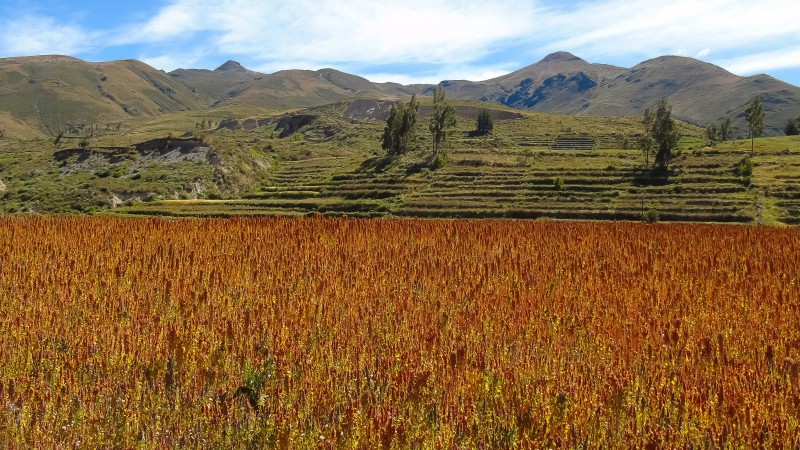
Despite stable demand, the Peruvian quinoa market is currently characterised by sluggish trading activity. While white quinoa is sufficiently available, there is a shortage of black and red quinoa. This also has a direct impact on the supply of the tricolour blend. As a result, prices for white quinoa remain stable, while the other varieties are showing an upward trend. According to experts at Chelmer Foods, Peru exported a total of 5,008 mt of quinoa in August 2025, representing an 11% decline compared to the same month last year. Furthermore, regulations on phosphonic acid and fosetyl content remain in place, limiting the ability of Peruvian exporters to supply organic quinoa to the EU.
Situation in Bolivia eases
Bolivian traders have been confronted with an unfavourable situation in recent months: while commodity prices rose in the domestic market, the exchange rate fell, reducing exporters' profit margins. Only in the past few weeks has the situation stabilised again, making it easier to plan ahead.
Smuggling activities to Peru due to the smaller crop had also caused prices to rise in Bolivia at first. Now that the situation has eased somewhat, prices for white quinoa have even fallen slightly again. However, red and black quinoa remain scarce here too, and the picture is similar to that in Peru in terms of both the availability of the tricolour mix and price developments.
EU imports have risen
Despite higher prices and lower availability in Peru, quinoa imports to the EU have recently risen. Between 1 July 2025 and 14 September 2025, the import volume increased by a whopping 46.9% compared to the same period last year. Peru and Bolivia are neck and neck as the most important suppliers; Bolivia increased its exports to the EU by 56.2% to 2,539 mt compared to last year, while Peru recorded a 30.5% increase in exports to EU countries, supplying a total of 2,402 mt. India lagged behind in third place with 741 mt, but with a remarkable increase of 156.4%. However, prices have also risen here, with quinoa, sortex cleaned, most recently trading at USD 761/mt FOB India.
The most important EU buyer of quinoa in the period mentioned was the Netherlands, which increased its imports by 172.4% to 1,400 mt. This was followed by Spain (+61.8% to 1,280 mt), Italy (+130.9% to 836 mt) and Germany (-18.4% to 816 mt). At EUR 14.369 million, the import value was 50.4% higher than last year, but the average import price was only EUR 2.40/kg, just 2.1% above last year's EUR 2.35/kg.
|
EU quinoa imports, in mt |
|||
|
Partner |
2023/24 |
2024/25 |
Diff. |
|
Bolivia |
1,625 |
2,539 |
56.2% |
|
Peru |
1,841 |
2,402 |
30.5% |
|
India |
289 |
741 |
156.4% |
|
New Zealand |
0 |
168 |
- |
|
USA |
0 |
71 |
- |
|
Morocco |
294 |
0 |
-100.0% |
|
Others |
19 |
55 |
189.5% |
|
Total |
4,068 |
5,976 |
46.9% |
|
DG AGRI TAXUD Customs Surveillance System, 01/07-14/09 10085000 Quinoa, “Chenopodium quinoa” |
|||
View more
- price charts for dried fruit, oilseeds, spices and more
View related articles